A head-to-head comparison of three leading consent management platforms, covering pricing, features, setup difficulty, and the trade-offs that actually matter for your stack.
Connect an AI assistant to your CookieBeam account over MCP and manage banners, scans and analytics from a conversation. Covers connecting, what the assistant can do, example prompts, access control and known limits.
The US Privacy String you built for CCPA was deprecated in January 2024. GPP, the US National string, and the MSPA replaced it, and getting the signal wrong can be a misrepresentation. Here's how the new US privacy signals move through the ad stack.
You're building fast, shipping faster, and privacy compliance is the last thing on your mind. Here's the smallest setup that keeps you legal without slowing you down.
What it takes for a Consent Management Platform to pass IAB Europe's TCF checks: a registered CMP ID, a cleanly decodable TC String, event-listener delivery, and encoding against the right GVL version.
A practical buyer's checklist for choosing a consent management platform in 2026: the non-negotiable features, the questions to ask every vendor, the pricing traps to avoid, and the red flags that signal a banner that won't actually keep you compliant.
A practical guide to GDPR cookie compliance on Wix. Covers the built-in banner's limitations, adding a third-party CMP, Google Consent Mode v2, Velo consent APIs, and checkout consent for Wix Stores and Bookings.
A practical guide to the IAB Transparency & Consent Framework for publishers: who needs it, what TCF 2.2 changed, the TCF 2.3 and 2.4 updates and their deadlines, and how to stay compliant.
How cookie consent directly impacts programmatic ad revenue for publishers: consented vs unconsented CPMs, TCF v2.4 requirements for maximum fill rates, Google's Certified CMP mandate, Prebid.js integration, and strategies to protect monetization without sacrificing compliance.
A step-by-step technical guide to switching consent management platforms without losing consent records, triggering mass re-consent, or breaking Consent Mode. Covers export, category mapping, parallel runs, and zero-downtime migration patterns.
A practical buyer's guide to cookie consent tools in 2026. Compares free, mid-market, and enterprise CMPs on scanning, script blocking, Consent Mode, TCF, regional consent, and pricing to help you pick the right one without the sales pitch.
GDPR Article 7(1) puts the burden of proof on you. This guide walks DPOs through exactly what consent records regulators request during audits, the technical schema behind defensible proof, cross-border requirements, and how to handle withdrawal and re-consent cycles.
Consent opt-in rates vary wildly by country. Here is what drives the differences, what to compare, and how to use regional data to improve your banner without crossing into dark patterns.
US state privacy laws require WordPress sites to offer an opt-out of sale and targeted advertising, honor GPC in a growing list of states, and get opt-in for sensitive data. Here is how to handle them together.
UK visitors need an opt-in banner where rejecting is as easy as accepting, and every WordPress plugin has to wait for the answer. Here is the plugin install, WP Consent API setup, and how to gate the plugins that ignore it.
UK visitors need an opt-in banner, and Wix sites have two consent systems that can conflict. Here's how to run one banner through Custom Code and keep Wix's own marketing integrations in check.
US state privacy laws require Webflow sites to offer an opt-out of sale and targeted advertising, and handle GPC in a growing list of states. Here is the head-code setup and how Webflow Analyze fits in.
UK visitors need an opt-in banner before Webflow sites load analytics or advertising tags, including Webflow's own Analyze and Optimize. Here's the head-code install and how the Webflow bridge works under UK rules.
What UK cookie law requires, what the UK GDPR preset configures, and step-by-step setup for WordPress, Shopify, Webflow, Wix, Squarespace and Google Tag Manager.
UK visitors need an opt-in banner before analytics and advertising tags load. On Squarespace that means one banner in Code Injection and moving tracking pixels out of the built-in fields.
US state privacy laws require Shopify stores to offer an opt-out of sale and targeted advertising, honor GPC in a growing list of states, and relay the sale-of-data signal to Shopify. Here is the setup.
UK shoppers need an opt-in banner, and Shopify's own tracking has to hear their answer. Here's how CookieBeam relays UK consent choices to Shopify's Customer Privacy API, and what else still needs gating.
California requires Shopify stores to offer a working Do Not Sell or Share opt-out, handle GPC, and relay the sale-of-data signal to Shopify itself. Here is the full setup.
US state privacy laws require an opt-out that stops advertising tags, and a growing number require honoring GPC. Here is how to configure a GTM container that respects both, across every covered state.
UK visitors need consent before Google Tag Manager fires analytics or advertising tags. Here is the container import, the Consent Mode defaults the UK preset applies, and the tags that Consent Mode alone won't stop.
A California opt-out needs to reach every advertising tag in the GTM container, including non-Google tags that ignore Consent Mode. Here is the setup, GPC handling, and restricted data processing for Google Ads.
How to give California visitors a working Do Not Sell or Share opt-out on WordPress and WooCommerce: plugin install, GPC handling, the WP Consent API, and the marketing plugins that keep firing after an opt-out.
Wix sites serving California need a Do Not Sell or Share opt-out that actually stops pixels and handles Global Privacy Control. Here's how Custom Code, Wix's own apps and a consent tool work together.
California doesn't want an opt-in banner from your Webflow site. It wants a working opt-out for sale and sharing, automatic GPC handling, and pixels that actually stop firing. Here's how to set that up.
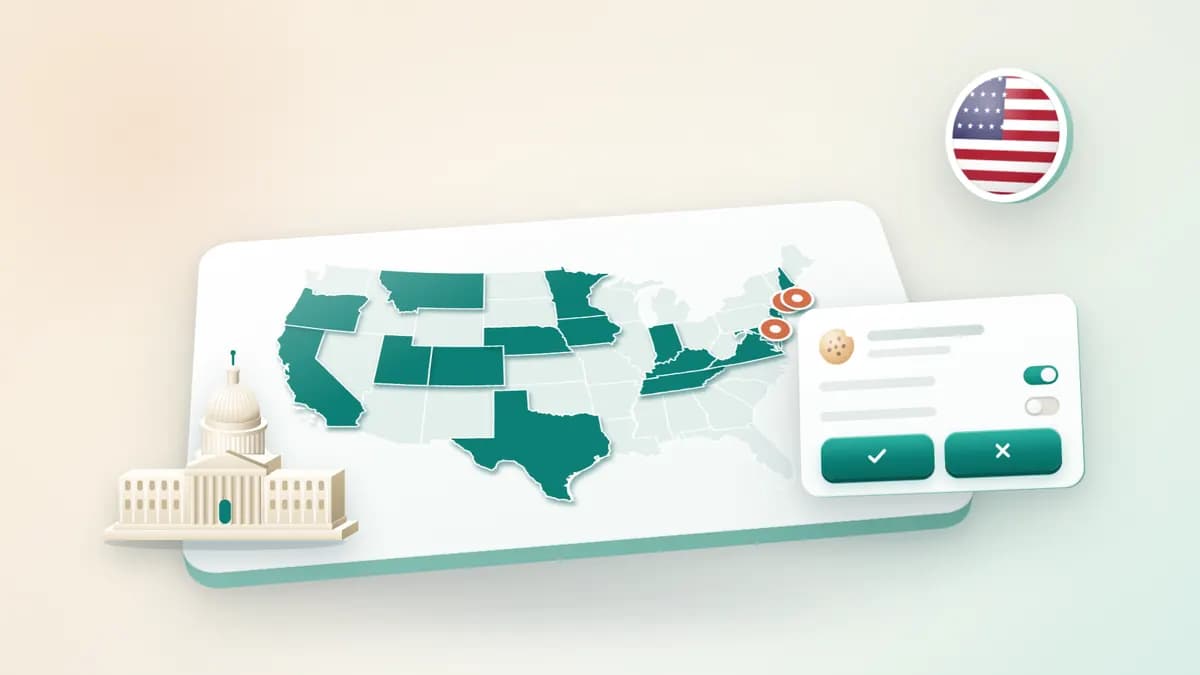
Fourteen checks for keeping one cookie banner compliant across every US state privacy law in 2026, from opt-out links and GPC to sensitive data, minors and consent records, with a link to each state's dedicated guide.
Tennessee's TIPA applies only to large businesses, keeps a permanent 60-day cure period, offers a NIST Privacy Framework defense, and does not require a universal opt-out signal. Here's what that means for cookies.
Squarespace's built-in cookie banner doesn't gate the advertising pixels you drop into Code Injection. This guide walks through adding a California opt-out that actually stops those tags and responds to Global Privacy Control.
Rhode Island's Data Transparency and Privacy Protection Act went live on January 1, 2026 with low thresholds, no cure period from day one, and a notice duty that requires naming the third parties you sell data to.
Next.js renders ad pixels inside React components, so a California opt-out has to reach into the component tree. Here's how to load the consent runtime, gate client-side pixels, and read the Sec-GPC header on the server.
The New Jersey Data Privacy Act covers nonprofits, has no revenue-share test on its second threshold, requires a universal opt-out signal, and protects teens. The cure period ended July 1, 2026.
New Hampshire's privacy law took effect January 1, 2025, with a 35,000-consumer threshold, mandatory GPC honoring from day one, and a cure period that's already gone. Here's what it means for your cookies and banner.
Minnesota's MCDPA went live on July 31, 2025. It requires honoring GPC, gives consumers the right to learn the specific third parties that got their data, demands a documented data inventory, and includes teen protections. The 30-day cure period ended January 31, 2026.
Maryland's MODPA takes a harder line than most state privacy laws. It caps sensitive data collection at what's strictly necessary, bans selling sensitive data entirely, and bars targeted ads to anyone under 18. Obligations kicked in on October 1, 2025.
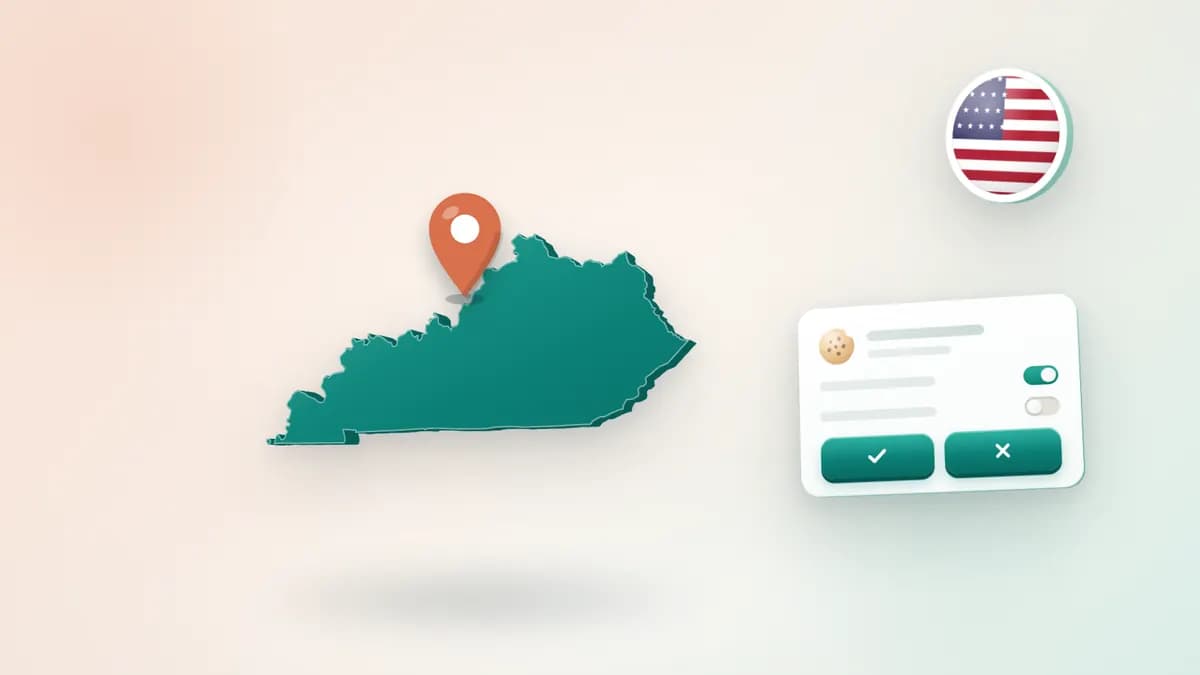
Kentucky's KCDPA took effect January 1, 2026. It copies the Virginia template almost line for line: opt-out for sale and targeted advertising, opt-in for sensitive data, a permanent 30-day cure period, and no GPC requirement. One quirk worth knowing: an automatic content recognition consent rule for smart TVs starting July 2027.
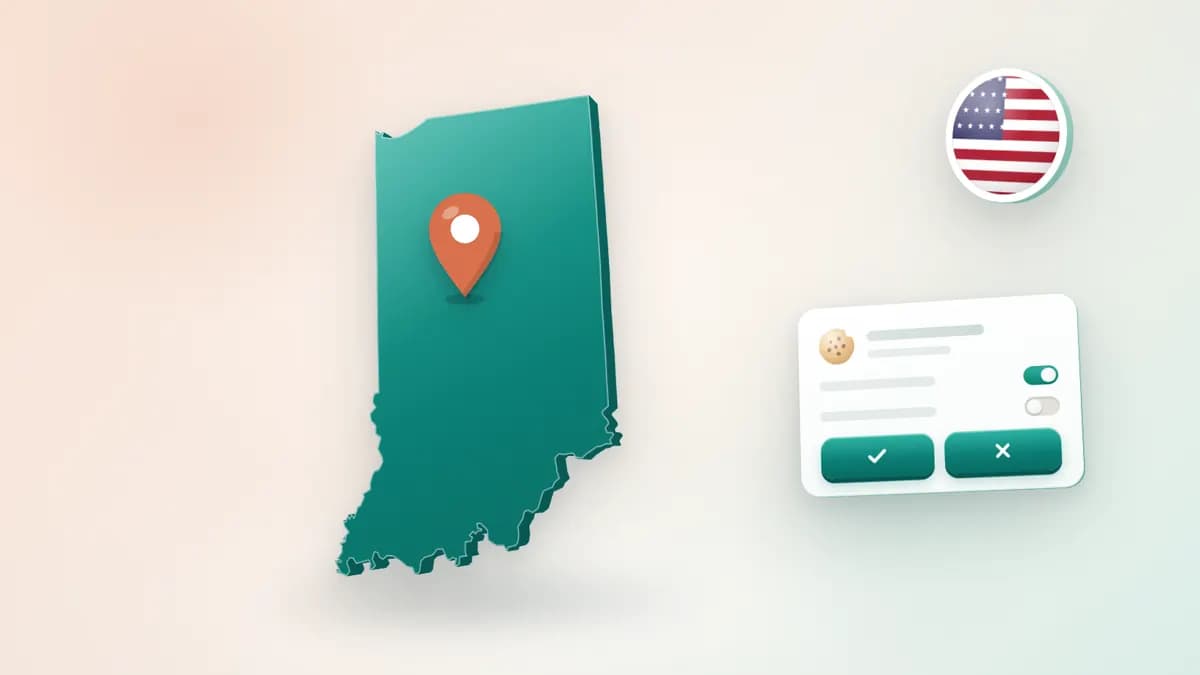
Indiana's Consumer Data Protection Act went live on January 1, 2026. It sticks close to the Virginia template: opt-out rights for sale and targeting, opt-in for sensitive data, a permanent 30-day cure period, and no requirement to honor GPC.
HubSpot's built-in banner governs HubSpot's own cookies but leaves your ad pixels untouched. Here's how to add a California opt-out on HubSpot CMS that covers every tag, including the HubSpot tracking code.
Series · 7 guides
Consent Mode bridges, platform by platform
How CookieBeam passes the visitor’s choice to each platform’s own consent API. One guide per platform.
Install CookieBeam on WordPress with the recommended plugin or a manual synchronous loader. Check theme hook order, managed scripts, and optimizer settings before publishing.
A step-by-step guide to migrating your cookie consent management from Cookiebot to CookieBeam, covering script replacement, consent mode setup, cookie categories, and what to verify after the switch.
Shopify's built-in cookie banner covers the basics, but falls short for stores selling into the EU, California, or multiple regions at once. This guide walks through what Shopify gives you, where it stops, and how to add a proper consent layer with CookieBeam.
Walk through your first automated cookie scan, from triggering the crawl to interpreting results and acting on what the scanner finds. Covers cookies, scripts, and network connections.
Add GDPR-compliant cookie consent to a Remix app. Covers script placement in root.tsx, streaming SSR considerations, consent-aware loaders, and the framework-specific quirks that trip up most implementations.
Set up Microsoft Consent Mode for both Clarity and Bing Ads in one go. Covers how consent signals work, what happens when visitors decline, and how CookieBeam handles it automatically alongside Google Consent Mode v2.
How to add a cookie consent banner to a Jekyll site hosted on GitHub Pages. Covers _includes setup, blocking analytics scripts, and working within Jekyll's static-site constraints.
Add a GDPR-compliant cookie consent banner to your Hugo site in minutes. Covers partial templates, baseof.html integration, script blocking, and the static-site-specific gotchas most guides skip.
Google now requires verified consent signals from EEA traffic before it will attribute conversions. Here's what that means for your ad spend, how Consent Mode v2 fills the gaps, and how to set it up so your conversion data stays accurate without breaking privacy laws.
How to add a compliant cookie consent banner to a Gatsby site. Covers gatsby-ssr.js script injection, blocking third-party scripts until consent, and handling consent in a static-site context.
Every major CMP offers a free tier, but the limits vary wildly. Here's an honest look at what free plans actually include, where they cut you off, and when it makes sense to upgrade.
Add a GDPR-compliant cookie banner to your Eleventy site. Covers Nunjucks/Liquid includes, blocking third-party scripts, and keeping your 11ty build fast.
A practical guide to writing a cookie policy that satisfies GDPR requirements and actually protects your business. Includes a template structure, common mistakes, and how to keep it updated.
SaaS platforms face unique consent challenges: sub-processors, embedded analytics, third-party integrations, and customers in multiple jurisdictions. Here's what you actually need to get right.
A practical audit checklist you can run right now to find cookie consent gaps on your website. Covers the 10 things regulators check first, with instructions for testing each one yourself.
Everything website owners need to know about California's CCPA and CPRA cookie consent requirements, from opt-out mechanisms to GPC support and enforcement penalties.
A practical guide to implementing cookie consent in React applications. Covers script loading strategies, consent state management with React Context, conditional rendering of tracking scripts, Google Consent Mode v2 integration, and one-line CookieBeam setup.
Focus is the keyboard user's cursor, and cookie banners keep losing it: no focus on open, a trap with no exit, or a sticky bar hiding the very field the user just tabbed to. Here's how to get focus right.
A marketplace tracks two audiences at once, buyers and sellers, and the platform and its sellers can end up as joint controllers of the same data. Here's how multi-vendor platforms handle cookie consent, controller roles, and the DSA's advertising limits.
Epic Games paid $520 million to the FTC over Fortnite, and Genshin Impact's developer paid $20 million in 2025. Here's how game studios handle cookie consent on their marketing sites, web stores, and account pages, with COPPA and age-gating built in.
Enterprise deals stall on a spreadsheet: the security and privacy questionnaire. Here's what SIG and CAIQ ask, which documents actually close the loop, and how the cookie consent questions get answered from your logs instead of a guess.
A 1988 law written for video-rental stores now drives class actions against any website that puts a tracking pixel near a video player. Here's how streaming and video sites handle the Video Privacy Protection Act alongside GDPR and state consent rules.
A trust center turns your three-week security questionnaire into a link. Here's what to publish openly, what to gate behind an NDA, and how your subprocessor list and consent records fit, so buyers self-serve their due diligence.
Drug makers usually aren't HIPAA covered entities, but their sites still handle health data that GDPR treats as a special category and that Meta throttles automatically. Here's how pharma and life-sciences companies run cookie consent across brand sites, HCP portals, and adverse-event forms.
If a visitor can accept cookies in one click but needs to email your DPO to refuse them later, your banner breaks GDPR. Article 7(3) requires withdrawal to be as easy as consent. Here's what that means in practice, and the classic failure of logging a withdrawal while the tag keeps firing.
Gyms and fitness apps aren't HIPAA covered entities, but the FTC has fined health and wellness apps for sharing workout and cycle data with Facebook and Google. Here's how fitness businesses run cookie consent across booking flows, member portals, and wearable sync.
Your visitors already told their browser they want less motion, forced colours, or bigger text. Most cookie banners ignore all of it. Here's how to honour the settings people have already chosen.
A cookie banner designed in English tends to break the moment it's translated. German runs long, Arabic runs the other way, and buttons overflow. Here's how to design a layout that holds up.
The second layer of your banner, the granular settings panel, is where consent actually gets specific. Here's how to design the toggles, labels, defaults, and buttons so every visitor can operate it.
Product analytics tools store a device ID in localStorage or a cookie, and their opt-out APIs stop the data send while often still writing that identifier. Here's why that gap matters for ePrivacy and how to gate Mixpanel and Amplitude properly.
Session recordings capture what people type, beyond where they click. Microsoft Clarity started requiring consent in Europe on 31 October 2025, and Hotjar records the moment it loads. Here's how to gate both and why masking is on you.
Matomo can run without a cookie banner, but only in a specific configuration. Turn on cookies, heatmaps, User ID, or session recording and you're back to needing consent. Here's exactly where the line sits and how to stay on the right side of it.
Adobe's Web SDK ships a real consent mechanism, defaultConsent and setConsent, so you don't have to bolt one on. Here's how to wire it to a banner, what the legacy AppMeasurement library needs instead, and where teams still leak the ECID cookie.
The smaller ad pixels don't ship a Google-style consent mode, so the safe default is the same for all three: don't load until the visitor accepts marketing. Here's the pattern for Pinterest, Snapchat, and Reddit, browser and server.
Meta Consent Mode gives you fbq('consent','grant') and fbq('consent','revoke'), but the Conversions API ignores them. Here's the full consent layer for Meta: browser pixel, server events, US opt-outs, and withdrawal.
The LinkedIn Insight Tag has no consent switch of its own, so B2B teams lean on legitimate interest and skip the banner. That's the wrong call. Here's how to load the tag only after consent, browser side and via the Conversions API.
The default TikTok Pixel snippet writes cookies the moment it loads, before anyone touches your banner. Here's how to gate both the browser pixel and the Events API on real consent, using TikTok's Cookie Consent Mode.
Washington's My Health My Data Act reaches far past hospitals and HIPAA. A cannabis retailer was sued in November 2025 over a website tracking pixel. Here's the two-permission structure, the geofencing ban, the separate homepage policy, and the private right of action that makes it dangerous.
Your abandoned-cart flow only works if you can identify the shopper, and identifying the shopper means a tracking cookie that needs consent. This guide untangles onsite tracking consent, abandoned cart vs abandoned checkout, the UK soft opt-in, and US SMS rules.
Running several brands or domains, the first question isn't technical, it's who the data controller is for each one. That answer decides whether you can share consent or must keep it separate. Here's how to structure a multi-property setup.
MiCA gives EU crypto platforms a hard authorization deadline and ties their data handling to GDPR. For a global exchange, that means running cookie consent properly across every jurisdiction it serves. Here's how.
A 2023 study found most EU cookie banners still fail. Building one right and verifying it works are different jobs. This is the QA pass you run after launch: the network-tab tests, the button rules, and the signals that trip up real audits.
The EU AI Act makes recruitment AI high-risk from August 2026, and the ICO has put automated hiring decisions on its enforcement list. Here's how job boards and career sites should handle cookie consent for candidate data.
The EU cookie law started as a telecoms rule. Telecom operators and ISPs carry a double obligation: consent for cookies on their websites, and consent for the traffic and location data their networks generate. Here's how to handle both.
A cookie policy copied from a template describes someone else's website. This guide shows how to build one from your real inventory: what each entry needs, the table format regulators expect, and how to keep it accurate as scripts change.
How to run Meta and Google Ads conversion tracking through a server-side GTM container, with event deduplication done right and consent enforced before any conversion leaves your server.
How Safari's Intelligent Tracking Prevention caps browser-set cookies at seven days, why server-set first-party cookies survive longer, and how server-side tagging extends cookie lifetime without cloaking.
A step-by-step guide to provisioning a server-side GTM container: hosting options from Google Cloud Run to managed tagging hosts, custom domains, wiring up your web container, and what it costs to run.
A Cookiebot-specific migration guide: export consent records, map categories, remove Cookiebot's tag-based blocking, and cut over to CookieBeam's automatic script interception, connection-level blocking, and continuous drift detection without breaking Consent Mode or losing consent history.
How the Global Privacy Platform's __gpp() function actually works: the six synchronous generic commands, the PingReturn object, applicableSections, and why the stub has to load first.
Vendor scripts call the CMP API before the CMP finishes loading. The stub is what keeps those early calls from throwing. Here's how the stub, the locator iframe, and the command queue work together.
The Global Vendor List is a large JSON document that changes weekly. Here's how to load it without slowing every page, why the slim and full variants exist, and how the version field ties back to the TC String.
Consent Mode v2 has been required since March 2024 to keep Google ad and measurement features working in the EEA. Here's the end-to-end setup wiring your CMP to Google's seven consent signals, step by step.
GDPR Article 30 requires most organisations to keep a written record of their processing activities. Here's how to turn a cookie and tracker inventory into ROPA entries a supervisory authority will accept.
When visitors see your banner every session, they stop reading and start reflex-clicking. Most over-prompting is a bug, not a design choice. Here's how to store consent for a sensible window, scope it right, and ask again only when the law requires it.
Most of your traffic is on a phone, but most banners are designed on a desktop. Here's how to size touch targets, place the reject button, and lay out a consent banner that holds up when the screen shrinks.
A single consent rate hides five different problems. Learn to read your banner as a funnel, from impression to interaction to the accept/reject/customize split, and segment it so you know exactly where consent leaks.
Insurers are financial institutions under GLBA and regulated by 50 state insurance departments, and their quote forms collect health and financial data. Here's how to run cookie consent on an insurance site without leaking regulated information.
A clear-eyed look at what free cookie consent tiers really include in 2026, which ones enforce consent and which are decorative, the hidden costs of free, and exactly when you need to pay for a CMP.
Usercentrics is a mid-market-to-enterprise CMP that now owns Cookiebot and offers self-serve plans alongside enterprise contracts. CookieBeam is a self-serve consent platform with server-side depth. Here's how they compare in 2026.
A practical SMB comparison of CookieBeam, Osano, and Termly in 2026: what each free tier actually includes, how the paid plans differ on script blocking, regional rules, and TCF, and which fits a small or growing business.
For teams that find OneTrust too heavy or too expensive for cookie consent. An honest look at what OneTrust is built for, what it costs, and when a self-serve CMP like CookieBeam is the better fit in 2026.
Iubenda bundles privacy policies, terms, and a cookie banner into one cheap subscription. CookieBeam focuses on the consent engine and server-side depth. Here's which fits your site in 2026.
Didomi is an enterprise consent and preference platform that acquired Sourcepoint in 2025. CookieBeam is a self-serve consent engine with 5-layer script blocking, connection-level enforcement, and server-side depth. Here's how they compare for 2026 buyers.
CookieYes is a low-cost, easy CMP popular with WordPress sites, and it puts Consent Mode v2 on its free tier. CookieBeam goes deeper with 5-layer script interception, connection-level blocking, and server-side tagging. Here's how they compare in 2026.
An honest, side-by-side comparison of CookieBeam and Cookiebot (by Usercentrics) in 2026: scanning, script blocking, Consent Mode, regional rules, server-side tagging, and how the two pricing models actually work.
Complianz is a deeply integrated WordPress privacy plugin with a one-time annual license. CookieBeam is a hosted, cross-platform consent engine. Here's which fits your stack in 2026.
The words on your cookie banner are the cheapest consent-rate lever you have. Here's how to write the headline, purpose descriptions, and button labels so more people opt in, and every variant stays compliant.
Google only requires consent signals for EEA, UK and Swiss traffic. Here's how the region parameter scopes strict consent defaults to those visitors while preserving measurement everywhere else.
Since 28 June 2025 the European Accessibility Act makes accessibility a legal requirement for e-commerce, banking, and many other services. Your cookie banner is part of that surface. Here's the standard, and a ten-minute test.
Auto dealers are financial institutions under federal law, and connected-car data just cost General Motors a five-year FTC ban. Here's what that means for cookie consent on dealership and automotive websites in 2026.
Licensed betting and casino operators answer to a gambling regulator and a data protection authority at the same time. Here's how to run cookie consent on an iGaming site without breaking marketing rules, affiliate tracking, or self-exclusion.
A cookie banner has three jobs: block non-essential trackers until the visitor decides, record the choice, and re-apply it. This guide walks through adding a working one to any site, from WordPress to hand-coded HTML.
Laravel renders Blade on the server, so the tag your team pasted into the master layout head fires on every request before consent. Here's how to control script placement with Blade stacks, gate server-side tracking, and read a JS-set consent cookie past Laravel's cookie encryption.
Splitting your storefront into a Jamstack frontend and a commerce API doesn't change the cookie rule. It changes where you enforce it, and it takes away some conveniences the old platform gave you for free.
Drupal core has no cookie banner, so consent comes from a contrib module. In 2026 the default has shifted: EU Cookie Compliance is minimally maintained and points users to Klaro, which the new Drupal CMS adopted.
Data portability is the most misunderstood data subject right. It is narrower than access, it only covers certain data, and a scanned PDF does not count. Here is exactly what GDPR Article 20 requires, what to leave out, and how the CCPA version differs.
California's Delete Act lets consumers erase their data from every registered broker with one request through DROP. Here is how it works, who counts as a broker, and the 2026 deadlines.
A standard YouTube or Vimeo embed connects to Google or Vimeo and sets storage before the visitor does anything. Here is how to gate video embeds properly, including what youtube-nocookie and dnt=1 actually do.
WooCommerce's own cart and session cookies are strictly necessary and need no consent. The tracking that does need consent comes from the plugins you add: Google for WooCommerce, Meta pixels, abandoned-cart tools. Here's what to block, what to leave alone, and how not to break checkout.
Webflow has no native, granular consent manager. Here's how to add a compliant cookie banner in 2026 using custom code, get the load order right so nothing tracks before consent, and wire up Consent Mode v2.
A developer's guide to cookie consent in Vue and Nuxt apps in 2026: avoiding hydration mismatches, deferring third-party scripts until consent with Nuxt Scripts, and wiring nuxt-gtag to Consent Mode v2.
Virginia was the second state after California to pass a broad consumer privacy law, live since January 1, 2023. It uses an opt-out model, requires opt-in for sensitive data, and, unlike Colorado or Texas, does not make you honor the Global Privacy Control.
Verify too little and you hand someone's data to an impostor. Verify too much and you break the law you are trying to follow. This is how to set the identity bar correctly under GDPR and the CCPA, including the requests where you are not allowed to verify at all.
Utah wrote the most business-friendly privacy law in the country. Live since December 31, 2023, the UCPA skips the universal opt-out mandate, asks only for notice-and-opt-out on sensitive data, and covers far fewer companies thanks to a $25 million revenue gate.
A universal opt-out mechanism lets people opt out of data sales across every site at once. Roughly a dozen states now make honoring one legally mandatory. Here is the map and how to comply.
Turkey's data authority published dedicated cookie guidance in June 2022 and amended the underlying law in 2024. Here's how the KVKK treats cookies: explicit consent by default, two narrow exceptions, and what the reforms changed.
Thailand's PDPA has been fully enforceable since June 2022, and the PDPC moved to active enforcement in 2024 and 2025. Here's how the law treats cookies: explicit opt-in consent, no implied consent from browsing, and records you have to keep.
Texas has no cookie-banner law. It has the TDPSA (live since July 1, 2024), a universal opt-out mandate that turned on January 1, 2025, and an attorney general running one of the most aggressive privacy enforcement operations in the country.
Switzerland isn't in the EU, and its cookie rules follow a different logic: risk-based, opt-out for low-risk cookies, opt-in for advertising and profiling. Here's how the revised FADP and the 2025 FDPIC guidance actually work.
Replacing one tracking tool with another quietly rewrites your cookie inventory and your data recipients. Here's how to swap vendors without leaking trackers or orphaning cookies.
SvelteKit renders on the server and hydrates on the client, which means a tracker in app.html or an onMount call can fire before consent. Here's where the consent loader belongs, how to block scripts until opt-in, and how to check consent in hooks.server.ts.
Squarespace has a built-in cookie banner, but it doesn't block non-essential scripts before consent or keep an audit log. Here's what the native banner does, where it falls short, and how to add a real CMP with Code Injection.
South Korea is one of the strictest consent regimes on the planet, and its regulator proves it. The PIPC has fined Google and Meta a combined 100 billion won for behavioral-ad tracking without consent. Here's how PIPA treats cookies after the 2023 overhaul and the 2026 amendment that raises penalty ceilings to 10% of revenue.
Instagram, X, TikTok, and Facebook embeds load third-party scripts and set cookies before anyone interacts. A CJEU ruling makes you a joint controller for that data flow. Click-to-load fixes it.
Since October 2022, Singapore's regulator can fine organisations up to 10% of local turnover for data breaches. Here's how the PDPA treats cookies, how deemed consent works, and why ignored browser settings don't count as agreement.
How cookie consent actually works on Shopify in 2026: the built-in banner, the Customer Privacy API (setTrackingConsent, visitorConsentCollected), Google Consent Mode v2, and when to add a dedicated CMP.
Health data, precise location, and other sensitive categories get special treatment under US state laws, and the rules split between opt-in consent and a right to limit. Here is how to handle them.
The right to erasure is not a delete button, and it is not absolute. Here is how to work an Article 17 request end to end: the six grounds, the exemptions that let you keep data, backups, the Article 19 downstream notification, and the CCPA right to delete in parallel.
Federal PIPEDA is flexible about cookies. Quebec's Law 25 is not. Section 8.1 requires profiling and tracking technology to be switched off by default, and the CAI can levy penalties up to CAD $25 million. Here's the Quebec-specific model, layer by layer.
A full audit once a year isn't enough when your site changes weekly. Here's a lighter quarterly review that keeps consent current between audits, with a repeatable agenda.
The cookie rule was never only about cookies. A service worker's cache, its IndexedDB store, and a push subscription are all storage on the user's device, which means a PWA can trigger consent without setting a single cookie.
The intake form is where a privacy request is won or lost. Get the fields, methods, and routing right and the rest of the process runs itself. Here is what the CCPA and GDPR require, the fields to capture, and the traps that turn a form into a dark pattern.
South Africa's Information Regulator issued its first POPIA fine (R5 million) in 2023 and has warned that more are coming. Here's how POPIA treats cookies, what section 69 means for tracking, and what the 2025 amended Regulations changed.
Oregon's privacy law turned on two things in 2026: a universal opt-out mandate that went live January 1, and the end of the cure period on the same day. It also gives residents a right most states don't, the names of the specific third parties that got their data.
Nigeria's NDPC now says cookie banners belong at the top of the page, not the bottom, and wants opt-in before non-essential cookies. Here's what the 2023 Act and the 2025 GAID require, and what enforcement looks like.
Four state privacy laws went live around 2025, and they don't agree with each other. Three require you to honor the Global Privacy Control; Iowa doesn't and skips the targeted-ad opt-out entirely. Here's how cookies work under each.
A consent setup that passed testing last quarter can be leaking today. Here's what consent drift looks like, why point-in-time scans miss it, and how to monitor continuously.
Adobe Commerce ships a native Cookie Restriction Mode, but it only shows a notice bar. It doesn't offer per-category choice, log consent, or signal Google Consent Mode. Here's how to configure it and close the gaps in 2026.
Chat widgets load third-party code and set cookies the moment your page opens. Whether that needs consent depends on how you use chat. Here is how to decide, and how to load the widget only when someone wants it.
Joomla ships privacy tools (a data-request dashboard and a Privacy Consent plugin), but none of it is a cookie banner. Core won't stop a single analytics cookie on page load. Here's how to add real consent.
Japan treats a bare cookie ID differently from Europe: on its own it usually isn't personal data. The consent obligation kicks in at a specific point, when you hand cookie-based data to a third party who can tie it to a person. Here's the personally-referable-information rule and what's changing.
A technical guide to honoring Global Privacy Control: detect the signal via navigator.globalPrivacyControl and the Sec-GPC header, auto-apply the opt-out, and meet California's 2026 requirement to display that the signal was honored.
HubSpot's native consent banner can do real opt-in blocking, but only for HubSpot's own cookies and the Google tags it manages. If cookies load before anyone clicks, the banner is almost certainly set to Notification.
The Do Not Sell link is the front door. This is the back office: what has to happen across your systems and vendor chain once someone opts out, the 15-business-day clock, who you must notify downstream, and why a preference that keeps the pixels firing is the exact failure regulators fine.
Your cookie inventory drifts the moment you ship a new page or a marketer adds a tag. Here's a practical re-scan cadence, plus the events that should trigger an off-cycle scan.
The Google Maps embed iframe sets non-essential cookies and sends visitor data to Google the moment your page loads. Gate it with a click-to-load facade, or drop Google for a cookieless map.
More than 140 countries now have a data protection law, and they split into two broad camps on cookies: opt-in and opt-out. Here's a country-by-country map of who requires what, and how to run one site across all of them.
Ghost's built-in analytics is cookie-free and needs no banner. But the moment you add Google Analytics, a Meta pixel, Disqus, or an embed through Code Injection, you're setting third-party cookies. Here's how to add a compliant banner and block those tags until consent.
Germany renamed its cookie law in May 2024, and §25 TDDDG still governs every read or write to a visitor's device. Here's how the two-layer German model works, what the new consent-management ordinance changes, and which of the 16 regulators actually enforces it.
Framer's built-in cookie banner is basic and Google-only. Here is how to add a fully compliant consent banner in 2026 with custom code, place it so nothing tracks before consent, and connect Consent Mode v2.
Beyond the EU, the US, and Brazil, a wave of privacy laws in the Gulf, Africa, and Southeast Asia now reach cookies and online tracking. Here is where consent is required in Saudi Arabia, the UAE, Nigeria, Vietnam, Indonesia, and Thailand in 2026.
GDPR gives you one month. California gives you 45 days. Brazil wants a first answer in 15. Every privacy law counts its own clock, and starting it late or missing an extension notice is its own violation. Here is the deadline for each major regime and how the clock actually runs.
The Do Not Sell link is the most enforced control in US privacy law, and the rules are more specific than most sites realize. Here is exactly what CCPA requires and how to get it right.
Connecticut's data privacy law just got a major overhaul that took effect July 1, 2026: a far lower coverage threshold, expanded sensitive data, and a blanket ban on targeted ads to teens. The GPC mandate has been live since January 2025.
Colorado was the first state to make honoring the Global Privacy Control mandatory. Since July 1, 2024, controllers have had to treat a GPC signal as an opt-out, the cure period is gone, and penalties reach $20,000 per violation.
China's PIPL has no legitimate-interests basis, so tracking almost always runs on consent, and it adds a concept most laws don't: separate consent for third-party sharing, targeted ads, and sending data abroad. Here's how it works after the 2024 transfer reforms.
BigCommerce is one of the few hosted platforms whose native banner really blocks scripts, if you register them in Script Manager and tag each with a consent category. The catch is everything that skips Script Manager.
Australia has no cookie-banner law, and it isn't getting one. But the 2024 Privacy Act reforms added a statutory privacy tort, a children's code, and penalties up to AUD $50 million. Here's what actually applies to cookies, and what's still coming.
Astro ships zero JavaScript by default, but the moment you drop in a Google Analytics snippet or a Meta Pixel it fires on render, before any consent. Here's how Astro processes scripts, how to block trackers until a visitor opts in, and how to wire up Consent Mode v2.
Angular bootstraps one JavaScript bundle and never reloads the page on a route change, so a tracker in index.html or the angular.json scripts array runs before your app decides anything. Here's where the consent loader belongs, how to block scripts, and how to expose consent through a service.
AMP won't run your normal CMP script. Consent on AMP goes through one component, amp-consent, plus a data-block-on-consent attribute on every tag you need to hold. Here's how the pieces fit together in 2026.
An AI chat widget does two things a plain chat widget doesn't: it writes storage the moment it loads, and it ships whatever a visitor types to an LLM provider that often sits in another country. Both carry consent consequences.
A new analytics tool, pixel, or chat widget can drop cookies before anyone consents. This is the step-by-step process to add a tracker without breaking compliance.
Nonprofits aren't exempt from GDPR cookie rules, but compliance doesn't require an enterprise budget. This guide covers common nonprofit cookies, budget-friendly strategies, and how to protect donor trust through transparent consent management.
Law firm websites face unique cookie consent obligations rooted in attorney-client privilege and professional ethics rules. Third-party tracking can expose which practice areas visitors browse, creating confidentiality risks that other industries don't face. This guide covers bar association duties, analytics risks, contact form consent, and how to configure strict defaults.
Government websites face the highest bar for cookie consent compliance: mandatory accessibility standards, strict analytics restrictions, multi-language requirements, and public trust obligations. This guide covers EU, US, and UK requirements and how to meet them.
Education websites face layered consent obligations under FERPA, COPPA, state student privacy laws, and general privacy regulations. This guide covers what K-12 schools, universities, and EdTech vendors need to know about cookies, analytics, and parent vs. student consent in 2026.
Seven consent banner UX patterns mapped to the jurisdictions they serve, the compliance requirements they satisfy, and the design decisions that make each one work in practice.
SaaS products face unique consent challenges: auth tokens live alongside product analytics, customer success tools need gating, and B2B contracts muddy who actually consents. A practical guide for founders and product managers.
A practical guide for restaurant owners and food service IT on managing cookie consent for online ordering, delivery platform widgets, reservation integrations, review embeds, and local SEO under GDPR and privacy laws.
A practical guide for real estate agencies and PropTech companies on managing cookie consent across property search, IDX/MLS feeds, virtual tour embeds, and CRM integrations without sacrificing lead generation.
A practical guide for hospitality IT and marketing teams on managing cookie consent across booking engines, OTA integrations, retargeting pixels, multi-property domains, and guest Wi-Fi portals under GDPR and global privacy laws.
A practical guide for event organizers and ticketing platform operators on managing cookie consent across high-urgency checkout flows, queue systems, embedded venue maps, marketing retargeting, and email integrations under GDPR and global privacy laws.
A practical guide for digital agencies managing cookie consent across 10-100+ client websites. Covers multi-client dashboards, white-label solutions, compliance templates, client reporting, pricing models, and how to turn consent management into a billable service.
A step-by-step developer tutorial for building a custom Google Tag Manager template that implements Consent Mode v2 using the sandboxed template APIs: setDefaultConsentState, updateConsentState, permissions, wait_for_update, and testing.
A deep technical guide to implementing cookie consent in Next.js App Router applications. Covers Server Component limitations, next/script strategies for CMP loading, Client Component consent wrappers, dynamic imports for consent-gated analytics, middleware-level enforcement, GTM with Consent Mode v2, and CookieBeam integration.
A practical guide for e-commerce teams on balancing cookie consent compliance with conversion performance. Covers essential cookies, marketing consent, server-side recovery, cross-border rules, and CookieBeam's auto-categorization for online stores.
Four concrete implementation patterns for sharing cookie consent across domains: parent-domain cookies, postMessage bridges, server-side API sync, and signed URL tokens. Covers code, security pitfalls, Consent Mode v2 per-domain firing, iframe propagation, and how CookieBeam's domain groups handle it.
Privacy by Design isn't a compliance checkbox, it's an architecture decision. This guide maps Ann Cavoukian's 7 foundational principles to concrete web development patterns: data minimization in forms, purpose limitation per cookie category, automatic storage cleanup, opt-in consent defaults, server-side processing, and structured consent logging.
A 25-point technical checklist for auditing whether your CMP actually works, banner behavior, Consent Mode signals, script blocking, regional rules, and how to document findings for compliance records.
Healthcare websites face unique cookie consent challenges under HIPAA, FTC enforcement, and state health data laws. This guide covers what went wrong with tracking pixels on hospital and telehealth sites, which cookies are safe, and how to handle consent for patient portals and appointment booking.
A setting-by-setting walkthrough of every GA4 configuration that affects GDPR compliance: data collection, retention, sharing, Consent Mode integration, data deletion, BigQuery exports, and a 20-item audit checklist you can run today.
Fintech companies face a triple compliance burden: PCI DSS 4.0 script controls on payment pages, PSD2 Strong Customer Authentication requirements, and GDPR consent obligations. This guide covers how these frameworks interact, what cookies are essential for payment processing, and how to implement consent without breaking payment flows.
SPAs break the assumptions that cookie consent platforms were built on. This developer guide covers race conditions, route-change consent, React/Vue/Angular integration patterns, SSR hydration timing, script gating with dynamic imports, and Consent Mode v2 sequencing for SPA navigation.
Well-optimized consent banners achieve up to 200% higher acceptance rates than unoptimized defaults. This guide covers the legitimate UX techniques that get you there in 2026 without crossing into manipulation.
Websites with underage audiences face stricter cookie consent rules under COPPA, GDPR Article 8, the UK Children's Code, and California's CAADC. This guide covers what's required, what cookies are permitted, and how to configure consent for children's content.
A practical guide to implementing cookie consent on WordPress in 2026. Covers plugin-based cookies, CMP installation, server-side consent enforcement with wp_enqueue_script, WooCommerce checkout handling, Google Consent Mode v2 with GTM, and caching pitfalls.
A full reference to every US state full privacy law active in 2026, covering all 20+ states, enforcement dates, opt-out vs opt-in models, GPC requirements, and practical compliance strategies.
PECR is the law that actually governs cookies in the UK, not the UK GDPR alone. This guide covers Regulation 6, the new analytics exemption under the Data (Use and Access) Act 2025, ICO enforcement, and what UK-specific CMP features you need in 2026.
Learn how to quantify the analytics data you lose to cookie consent, benchmark your consent rates by region, and build a measurement framework that accounts for modeled data, server-side recovery, and first-party strategies.
India's Digital Personal Data Protection Act introduces registered Consent Managers, mandatory consent in 22 official languages, and single-click withdrawal. Here's what global websites need to know before the May 2027 enforcement deadline.
A practical, step-by-step guide to diagnosing broken Consent Mode v2 implementations. Learn to decode gcs and gcd parameters, catch race conditions, and fix the issues causing missing conversions and empty audiences.
Everything you need to wire Google Tag Manager to a consent banner: Consent Initialization triggers, the consent template, the Additional Consent Checks refire problem, Consent Mode v2 default and update commands, regional defaults, server-side tagging, and how CookieBeam handles all of it.
A/B testing your cookie banner can lift consent rates, but regulators draw a hard line between optimization and manipulation. This guide maps the legal boundaries, covers what actually moves the needle, explains how CookieBeam's built-in testing works, and shows how to document tests for compliance audits.
How to set up server-side tagging on Shopify with proper consent management, integrating sGTM with Shopify's Customer Privacy API, Consent Mode v2, and GA4/Google Ads/Meta CAPI tracking while avoiding the consent pitfalls that catch most stores.
Mobile apps don't use cookies, but they collect device IDs, IDFA, and GAID that trigger the same GDPR consent requirements. Learn how ATT, Privacy Sandbox, TCF mobile SDKs, and Firebase Consent Mode shape consent on iOS and Android in 2026.
A step-by-step guide to moving your WordPress site's analytics and ad tracking server-side with a GTM server container, the data layer, the first-party endpoint, consent handling, and how to validate it.
How to move your Shopify store's tracking server-side with a GTM server container, why it matters for data quality and privacy, how it fits with the Customer Events API, and a step-by-step implementation path.
Learn how transitioning from client-side to server-side consent enforcement improves compliance, eliminates third-party tag piggybacking, and creates an auditable gatekeeper for your tracking data.
GDPR demands opt-in, US laws expect opt-out, and other regions have their own rules. Instead of building a separate banner for each, a region-aware consent engine adapts behavior to each visitor's location. Here's how it works.
Canada's PIPEDA governs how you handle the personal data of Canadian users, including cookies. Learn its consent model, how it differs from GDPR, and what your website needs to do.
A practical guide to Brazil's Lei Geral de Proteção de Dados (LGPD) for website owners, legal bases, cookie consent, data-subject rights, the ANPD's enforcement powers, and how LGPD differs from GDPR.
Sending EU visitors' data to US-based tools is one of the trickiest parts of GDPR compliance. This guide explains why transfers are restricted, what the Data Privacy Framework and SCCs do, and how to keep your stack lawful.
If you run several domains or a network of brand sites, asking visitors to consent again on each one is bad UX and inconsistent compliance. This guide explains how cross-domain consent sharing works and when it is legally appropriate.